

Public Safety Is Asking the Wrong Question About AI Recruitment
Public safety is asking the wrong AI question. Here's the one leaders should be asking.
Why Public Safety Leaders Are Asking About AI
Lately, everywhere I go, someone asks me the same question.
“Should we be using AI?”
I heard it several times at this year’s National Volunteer Fire Council (NVFC) Training Summit, and I’ve continued to hear it from public safety leaders across the country. It’s a fair question.
I just don’t think it’s the right one.
One session that stood out at the Summit was “Using AI to Enhance Educational Messages and Outreach,” presented by E. Brené Ball. While her presentation focused on educational outreach, one idea stayed with me:
Think of AI as an assistant, not a replacement.
That simple idea applies just as well to recruiting.
Whether you recruit volunteer firefighters, EMTs, paramedics, police officers, deputy sheriffs, correctional officers, dispatchers, or civilian support personnel, the principle is the same.
The more I thought about it, the more convinced I became that many public safety organizations are asking the wrong question.
Instead of asking, “Should we use AI?” we should be asking, “What role should AI actually play?”
Those are two very different conversations.
AI Is Another Tool—Not the Recruitment Strategy
Over the years, I’ve watched departments chase what they hoped would be the next recruitment solution.
It was websites.
Then social media.
Today, it’s artificial intelligence.
Every one of those tools has helped volunteer fire departments, EMS organizations, police departments, sheriff’s offices, and other public safety agencies become more visible and communicate more effectively.
Whether we’re talking about volunteer firefighter recruitment, volunteer EMS recruitment, police recruitment, or sheriff’s office recruitment, technology has always supported the recruiting process—but it has never replaced the relationships that make recruitment successful.
People stay because someone welcomed them, followed up after they applied, introduced them around the station, checked on them when they disappeared for a few weeks, and made them feel like they belonged.
That’s why I don’t see AI replacing recruiters.
I see it helping recruiters spend more time recruiting.
The Real Challenge Isn’t AI—It’s Time
Let me ask you something.
How much time does the person responsible for recruitment in your organization actually spend recruiting?
If your department is like many I work with, probably not as much as you’d think.
Administrative work has a way of taking over.
Emails need to be written.
Meetings have to be summarized.
Information needs to be organized.
Content needs to be created.
The challenge isn’t a lack of effort.
It’s a lack of time.
That’s why so many good recruiters feel like they’re always behind.
I’ve never walked into a department and found a recruitment problem that was caused by a lack of artificial intelligence.
I have walked into plenty of departments where recruiters simply didn’t have enough time to recruit.
That’s the real opportunity AI creates.
Where AI Creates Real Value
Imagine your recruitment coordinator suddenly had five extra hours every week.
Would you want them behind a computer writing more emails, or would you rather they spend that time calling applicants, mentoring new members, attending community events, and reconnecting with volunteers who quietly stopped showing up?
That’s where AI creates real value.
Use AI to draft recruitment emails, create social media content, summarize meeting notes, organize research, brainstorm recruitment campaign ideas, and handle repetitive administrative work.
Notice what’s missing from that list.
Relationships.
Artificial intelligence can improve efficiency, but it can’t replace trust, mentorship, or genuine conversations with prospective members.
If you’re a chief, don’t start by asking your recruitment coordinator whether they’re using AI.
Start by asking what takes up most of their week.
Their answer will probably tell you exactly where AI belongs.
Don’t Let AI Become the Next Excuse
I also think we need to be careful not to make AI the next excuse.
Years ago, departments told me they couldn’t recruit because they didn’t have a website.
Then it was social media.
Later, it was the younger generations.
Now I’m hearing,
“We really need to start using AI.”
And I agree.
We absolutely should be exploring how AI can make our organizations more effective.
Ignoring it isn’t a strategy.
But let’s not confuse adopting AI with solving recruitment.
If applicants wait three weeks for a phone call, AI isn’t the problem.
If nobody follows up after an open house, AI isn’t the problem.
If new members leave because they never felt connected, AI isn’t the problem.
Adding AI to a broken recruitment process doesn’t fix the process.
It simply helps you do the wrong things faster.
What AI Can’t Replace
AI won’t replace a recruiter any more than a Halligan bar replaces a firefighter.
It’s a tool.
The outcome still depends on the person using it.
Recruitment and retention are still built on relationships. They depend on trust, communication, mentorship, and a sense of belonging—things no technology can automate.
Technology will continue to evolve, but leadership still comes down to people.
If AI helps you spend less time behind a keyboard and more time talking to applicants, mentoring new members, strengthening relationships, and welcoming the next generation into your organization, then it’s doing exactly what it should.
That’s the role AI should play.
By Walter A. Campbell
Recruitment & Retention Strategist
AI won’t solve your recruitment and retention challenges, but it can help your team spend more time building relationships.
If you’re wondering where AI fits into your public safety recruitment and retention strategy, let’s talk.
Email GetStarted@ResponderMAX.com to schedule a conversation about your recruitment process, applicant follow-up, onboarding experience, and where AI can help your organization work smarter.
Frequently Asked Questions
Can AI replace recruiters?
No. AI can automate repetitive administrative tasks, but recruiting, mentoring, and building relationships still require people.
How can fire departments use AI for recruitment?
Fire departments can use AI to draft emails, create recruitment marketing content, summarize meetings, organize information, and save recruiters valuable time.
Should volunteer fire departments use AI?
Yes. AI should support your recruitment process by reducing administrative work so your team can focus on building relationships with prospective members.
How can law enforcement agencies use AI?
Police departments and sheriff’s offices can use AI to improve communication, streamline administrative work, organize hiring information, and support recruitment marketing efforts while keeping people at the center of the hiring process.
More from Recruitment & Retention
 The First-Year Retention Toolkit
 Stop Saying Young People Don’t Want to Serve.
 Why Your Best Recruit Quits in Year OneView all →
More from Responder MAX
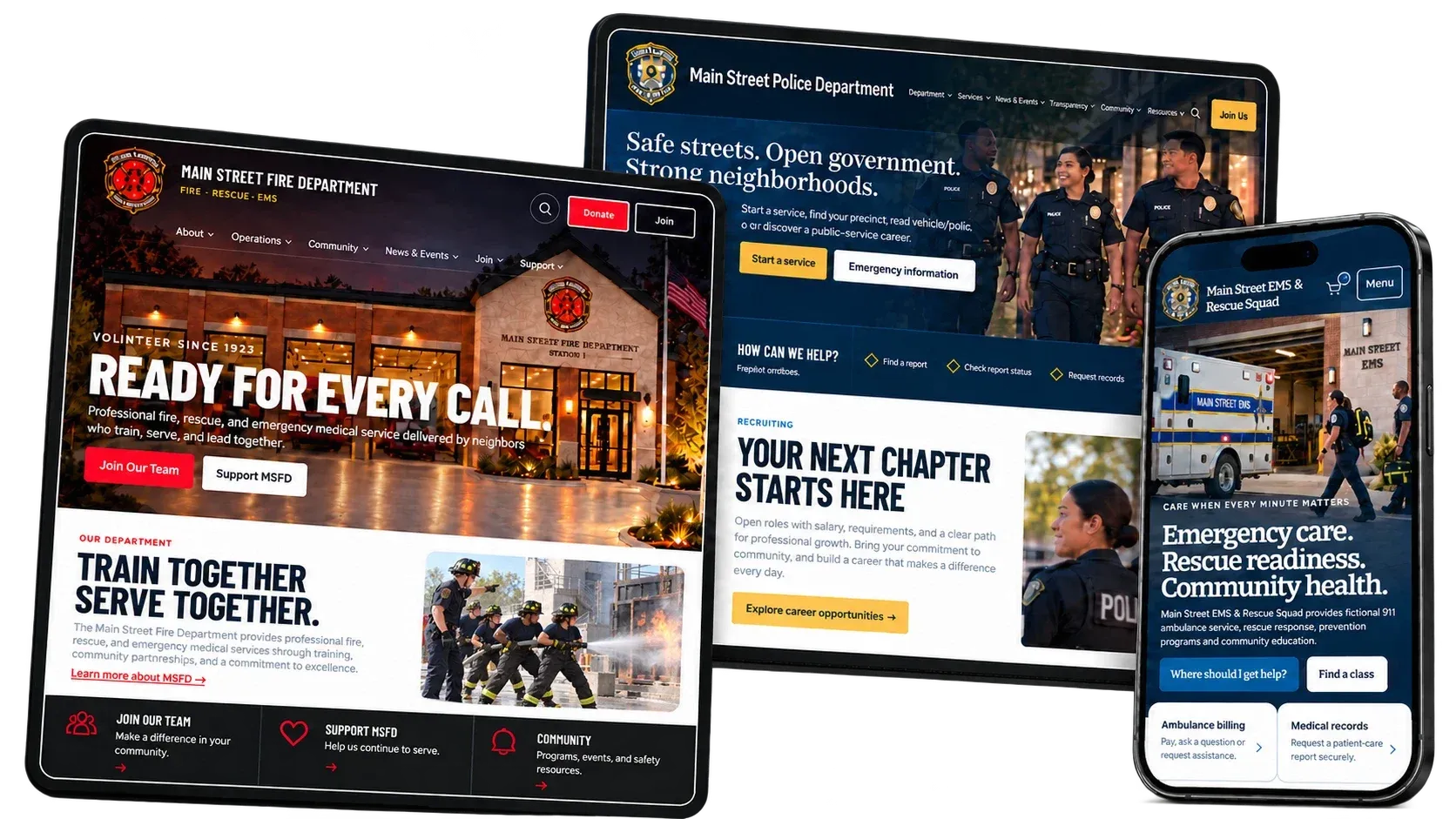 Meet the new Responder MAX CMS: a website platform built for public safetyOct 18, 2026
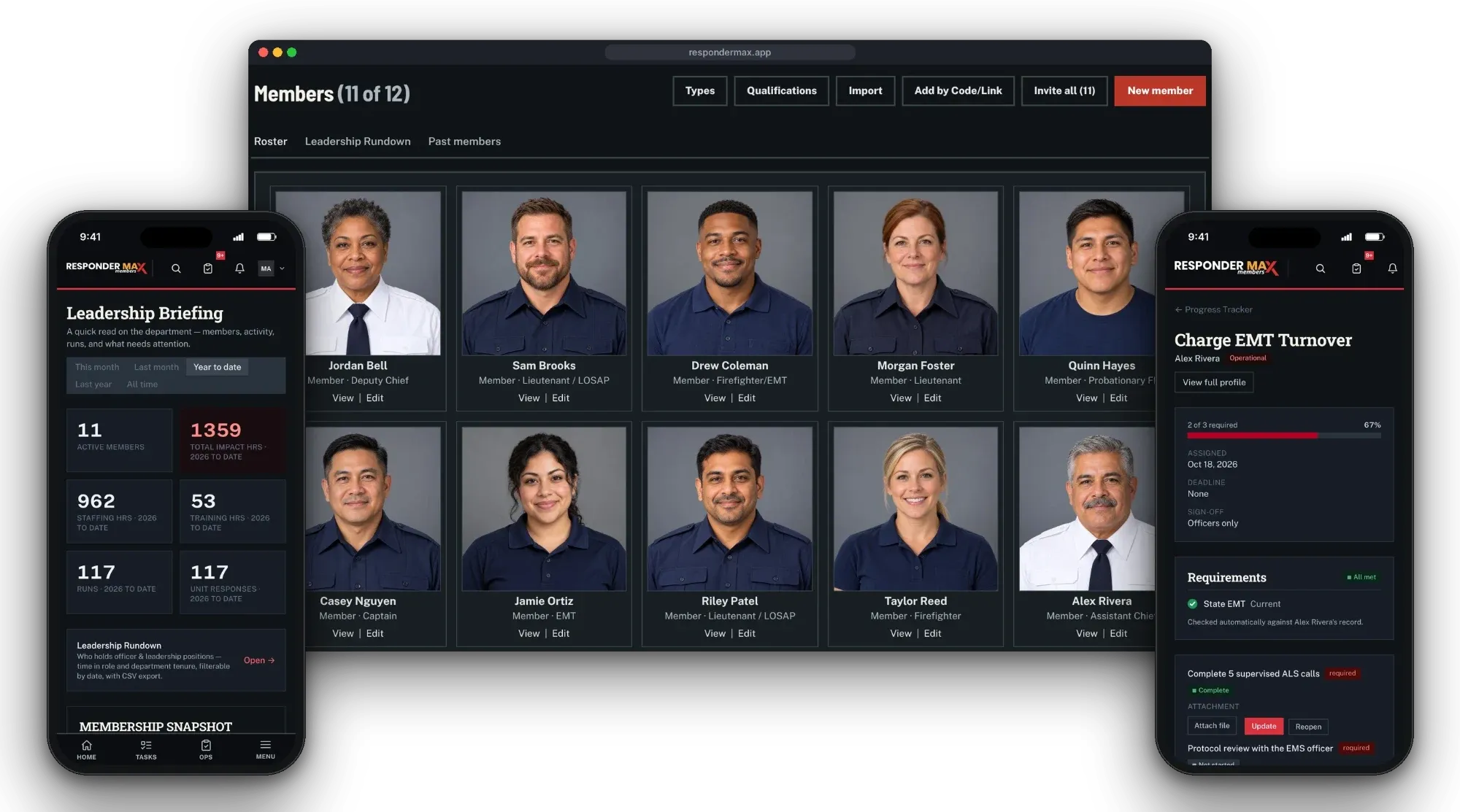 Meet MAX Members: one platform to run your volunteer department’s membershipOct 18, 2026
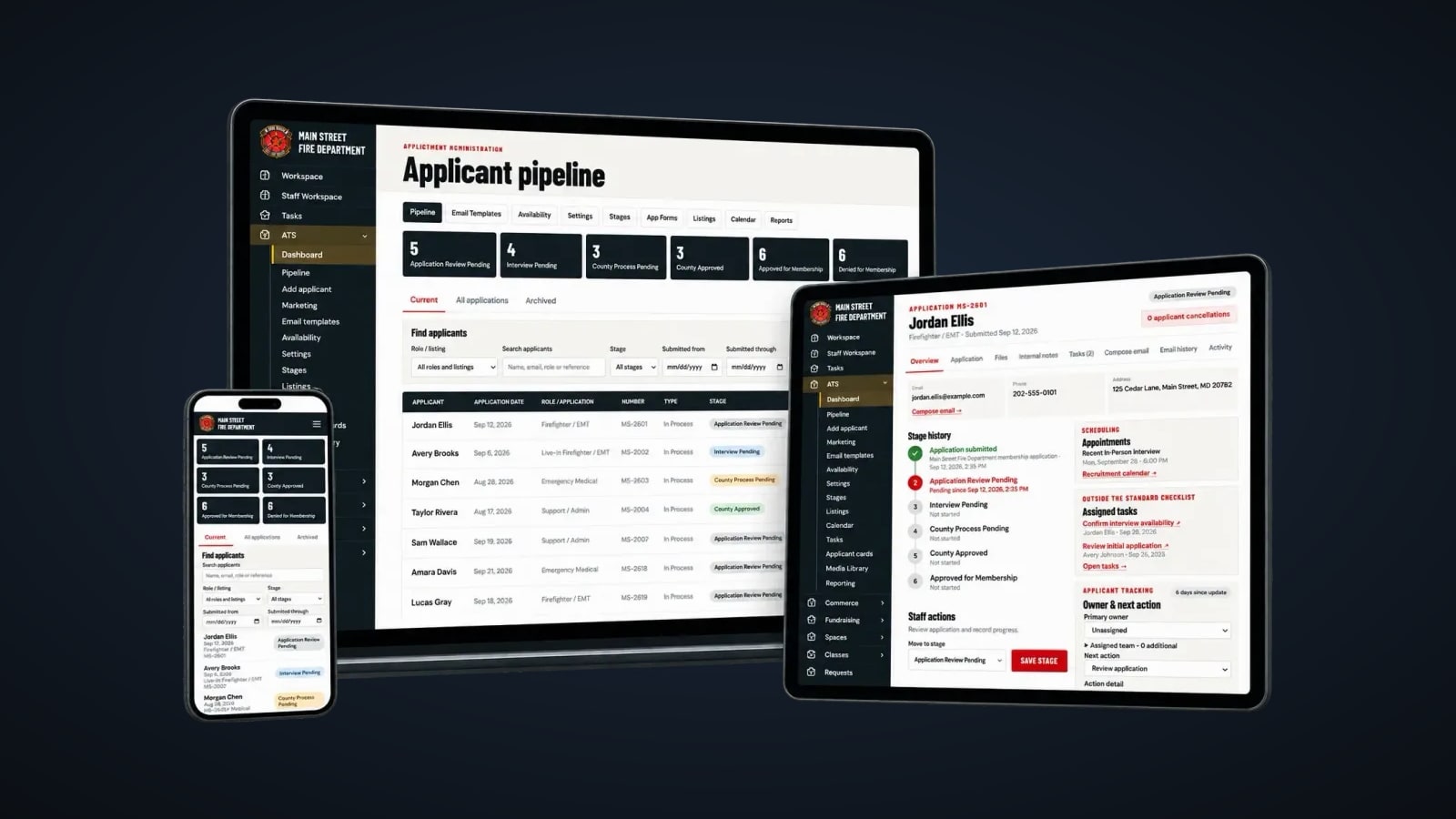 The MAX Recruitment Suite is here: attract, capture, interactOct 18, 2026
 Why Public Safety Recruitment Isn't Working: The T.F.C. FrameworkJul 8, 2026
 Public Safety Doesn’t Need More Disconnected Software. It Needs Platforms That Work Together.Jun 6, 2026